
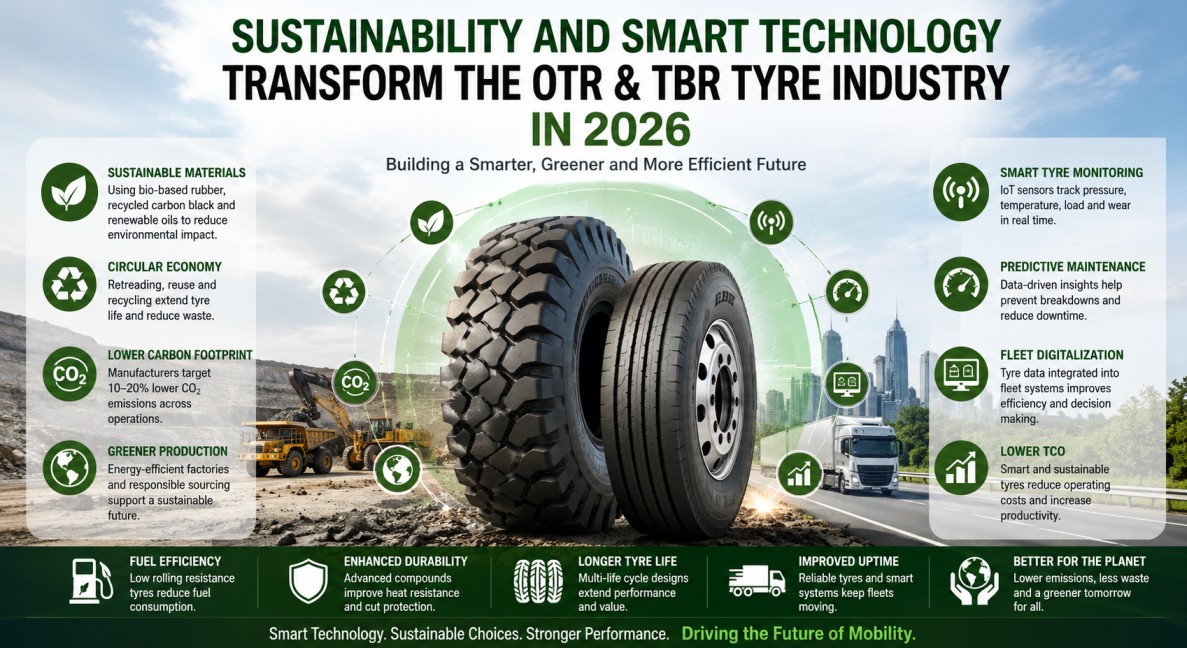
Sustainability and Smart Technology Transform the OTR & TBR Tyre Industry in 2026
The global OTR and TBR tyre industry is undergoing a major transformation driven by sustainability goals and digital innovation. Manufacturers and fleet operators are increasingly adopting eco-friendly materials, smart monitoring systems, and circular economy practices to improve efficiency, reduce costs, and lower environmental impact throughout 2026.
Market Sustainability Shift
- Eco-friendly materials: Increased use of bio-based rubber, recycled carbon black, and renewable oils in tyre production.
- Carbon reduction targets: Manufacturers aim to reduce CO₂ emissions by improving factory efficiency and raw material sourcing.
- Circular economy adoption: Growing focus on reuse, retreading, and recycling to extend tyre lifecycle.
- Regulatory pressure: Environmental regulations are pushing the industry toward greener production standards.
Smart Tyre Technology Trends
- IoT tyre monitoring: Real-time tracking of pressure, temperature, load, and wear conditions.
- TPMS expansion: Tire Pressure Monitoring Systems are becoming standard in commercial fleets.
- Predictive maintenance: Data-driven systems help reduce breakdowns and unexpected downtime.
- Fleet digitalization: Integration of tyre data into fleet management platforms improves operational efficiency.
Industry Transformation Drivers
- Fuel efficiency demand: Companies prioritize low rolling resistance tyres to reduce fuel costs.
- Total Cost of Ownership (TCO): Fleet operators focus on long-term cost savings rather than purchase price.
- Retreading growth: Strong adoption of retreaded tyres in both OTR and TBR segments.
- Global sustainability goals: Net-zero targets are accelerating green innovation across manufacturers.
Technology & Product Innovation
- Smart sensors integration: Embedded sensors improve safety and performance monitoring.
- Durability improvements: New compounds enhance heat resistance and cut protection.
- Extended tyre lifespan: Multi-life cycle designs improve efficiency in heavy-duty applications.
- Automation in fleet management: AI-based systems optimize tyre usage and replacement timing.
Industry Impact
- Lower operating costs: Smart and sustainable tyres reduce total fleet expenses.
- Improved uptime: Predictive systems minimize breakdowns and downtime.
- Environmental benefits: Reduced waste and lower emissions across tyre lifecycle.
- Stronger fleet efficiency: Better monitoring leads to optimized performance and fuel savings.
Outlook
The OTR and TBR tyre industry in 2026 is expected to continue shifting toward sustainability and digital intelligence. As fleets modernize and environmental regulations tighten, demand for smart, durable, and eco-efficient tyres will increase. Manufacturers investing in circular economy models and connected tyre technologies are likely to lead future market growth.
Reference
- Source: Global tyre industry sustainability and smart mobility trends (2026 market analysis).