
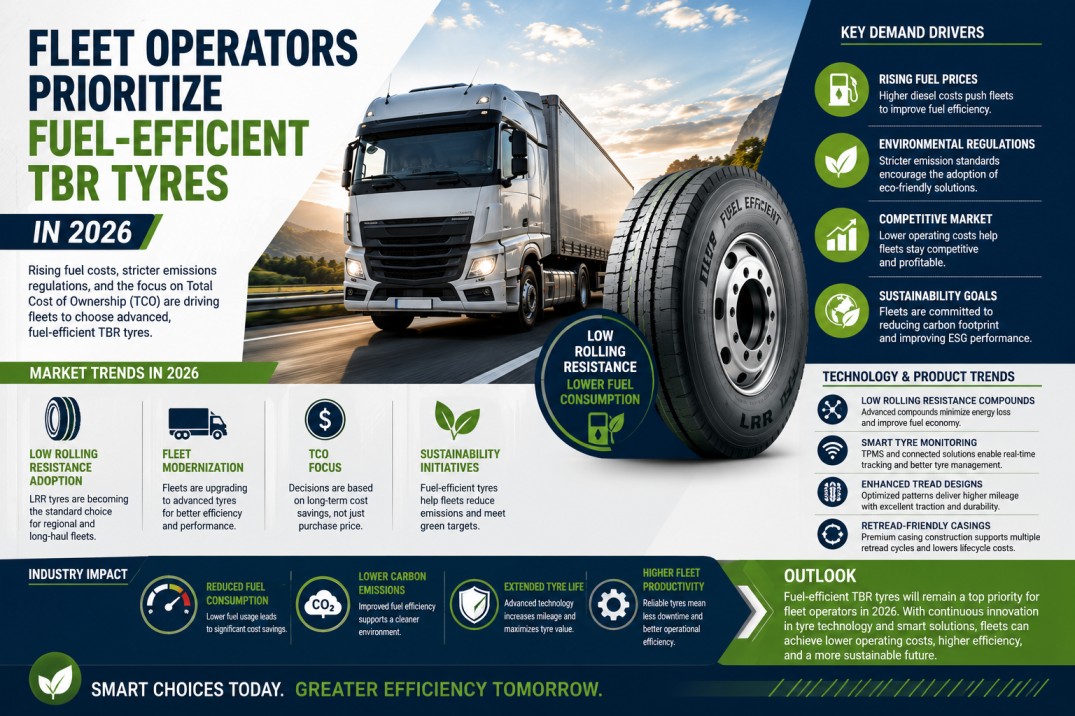
Fleet Operators Prioritize Fuel-Efficient TBR Tyres in 2026
Fleet operators worldwide are increasingly prioritizing fuel-efficient Truck and Bus Radial (TBR) tyres as operating costs continue to rise. Higher fuel prices, tighter environmental regulations, and greater emphasis on Total Cost of Ownership (TCO) are encouraging fleets to invest in advanced tyre technologies that improve fuel economy and reduce overall operating expenses. This trend is expected to continue throughout 2026 as transportation companies focus on maximizing efficiency and profitability.
Market Trends by Numbers
- Fuel cost management: Fuel remains one of the largest operating expenses for commercial fleets globally.
- Low rolling resistance adoption: Increasing adoption of low rolling resistance (LRR) tyres across regional and long-haul fleets.
- Fleet modernization: Companies are upgrading to fuel-efficient tyre solutions to improve operational performance.
- TCO focus: Fleet purchasing decisions are increasingly based on long-term operating costs rather than initial purchase price.
- Sustainability initiatives: Fleets are adopting fuel-efficient technologies to reduce carbon emissions.
Key Demand Drivers
- Rising fuel prices: Higher diesel costs are driving demand for fuel-saving tyre technologies.
- Environmental regulations: Stricter emissions standards encourage fleets to improve fuel efficiency.
- Competitive freight market: Transportation companies seek lower operating costs to remain competitive.
- Corporate sustainability goals: Many fleet operators are pursuing carbon reduction strategies.
Technology & Product Trends
- Low rolling resistance compounds: Advanced tread compounds help reduce energy loss and improve fuel economy.
- Smart tyre monitoring: TPMS and connected tyre technologies enable better tyre management and maintenance.
- Enhanced tread designs: New tread patterns improve mileage while maintaining traction and durability.
- Retread-friendly casings: Premium casing designs support multiple retread cycles, lowering lifecycle costs.
Industry Impact
- Reduced fuel consumption: Fuel-efficient tyres help fleets lower operating expenses.
- Lower carbon emissions: Improved fuel economy contributes to sustainability objectives.
- Extended tyre life: Advanced tyre technologies increase mileage and service life.
- Higher fleet productivity: Reliable, efficient tyres improve vehicle uptime and operational efficiency.
Outlook
The outlook for fuel-efficient TBR tyres remains highly positive as fleet operators continue to focus on cost control and sustainability. Growing adoption of low rolling resistance technologies, smart tyre monitoring systems, and durable casing designs is expected to drive demand throughout 2026. Manufacturers offering solutions that combine fuel savings, long mileage, and lower total ownership costs are likely to benefit most from this trend.
Reference
- Source: Global commercial fleet trends, fuel efficiency initiatives, and TBR industry analysis (2026 market estimates).